
Last Updated on 25/04/2024 by Dochlaggie. Post first published on October 13, 2022.
Pomeranian dogs are renowned for their fluffy coats and energetic natures, but did you know that there’s a lot more to these little guys than meets the eye? The Merle Pomeranian is just one of the many variations of this breed that have been bred over time.
The Merle Pomeranian dog is known for its beautiful coloring- which has led people to believe they’re rare or special. But what really makes them so different from other types of Poms? Find out by reading on!
- What is a merle Pomeranian?
- Merle Pomeranian dog information.
- Merle Pomeranian pattern.
- Merle colored Pomeranian genetics.
- Merle Pomeranian colors.
- Breeding merle Pomeranian dogs are explained in detail.
- Blue merle Pomeranian’s health problems are clarified.
- Double merle Pomeranian issues explained.
What is a Merle Pomeranian?
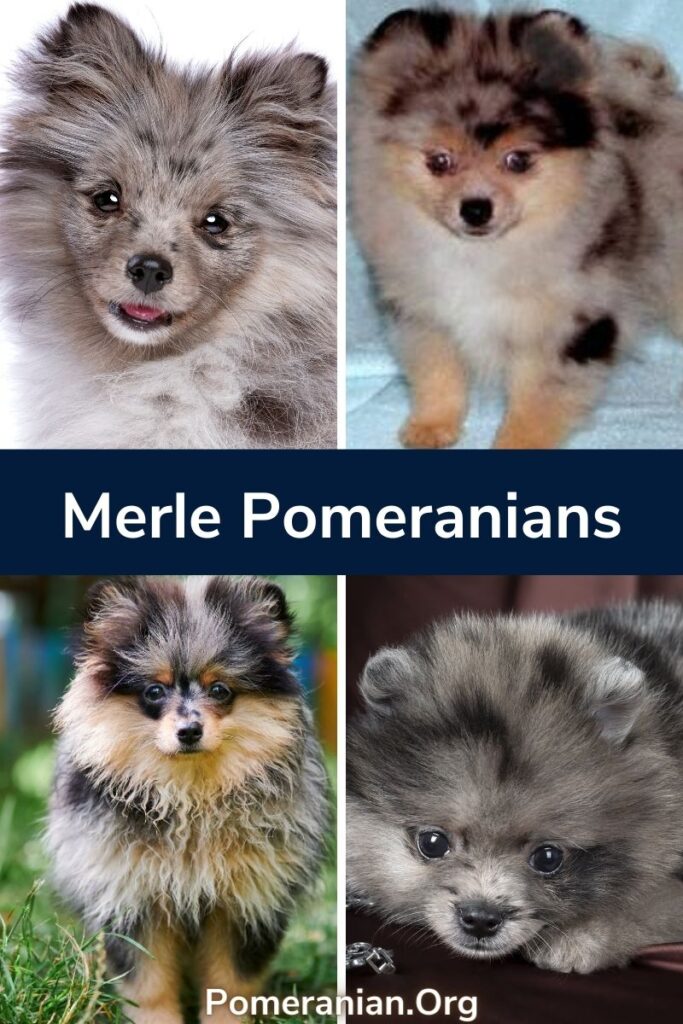
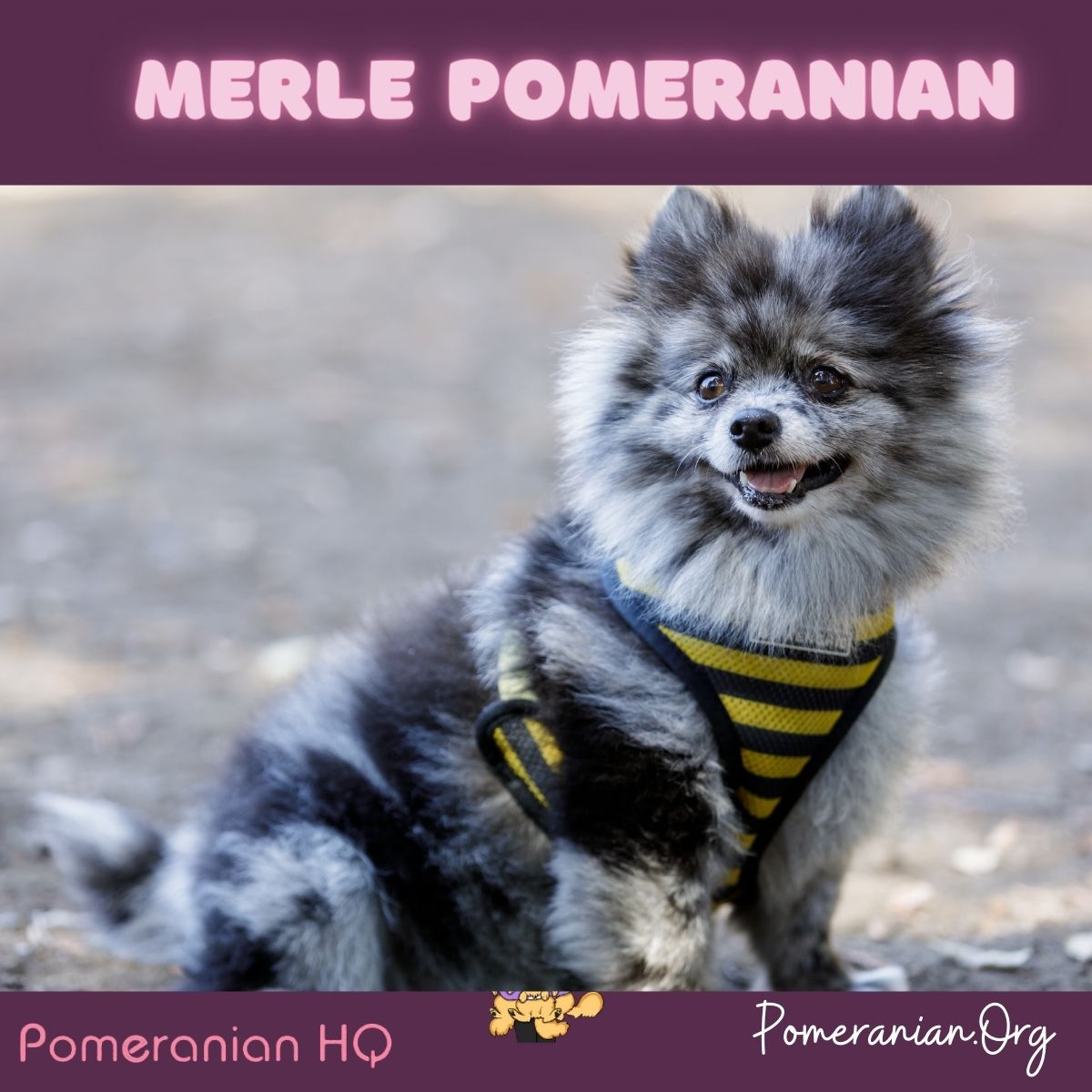
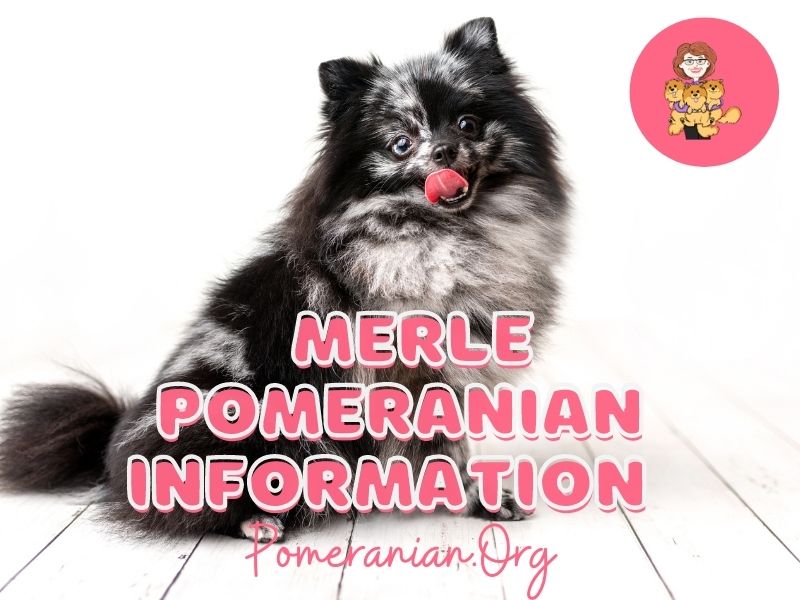
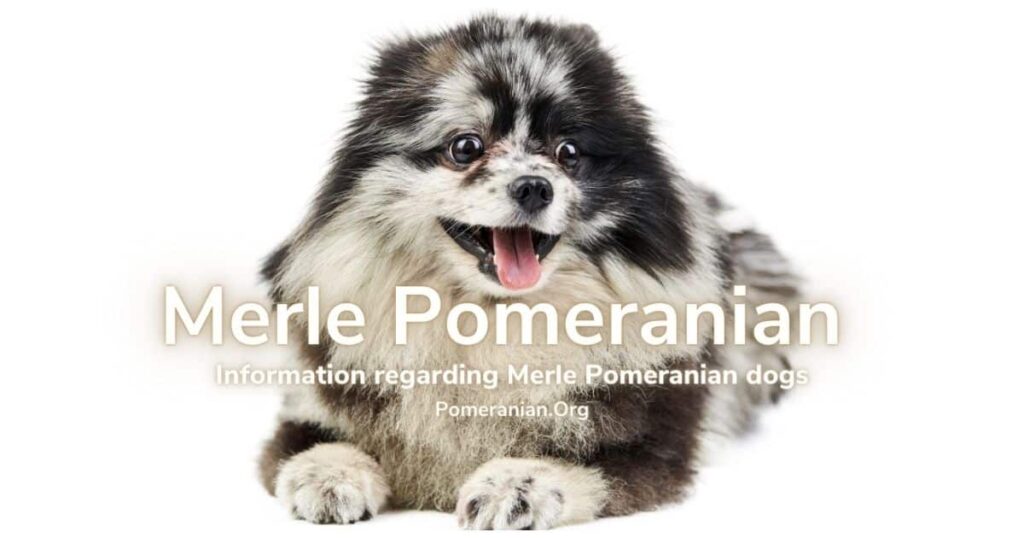
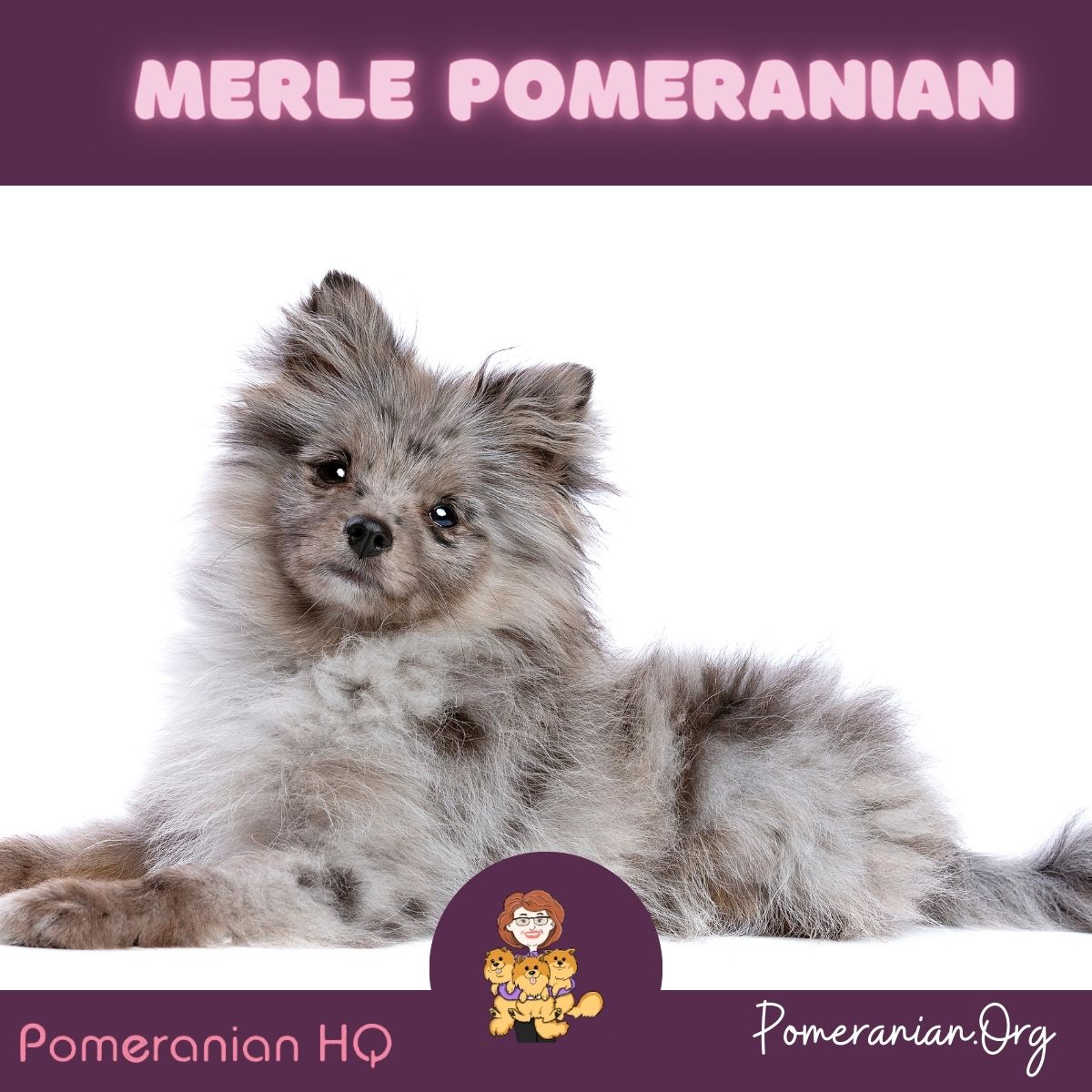
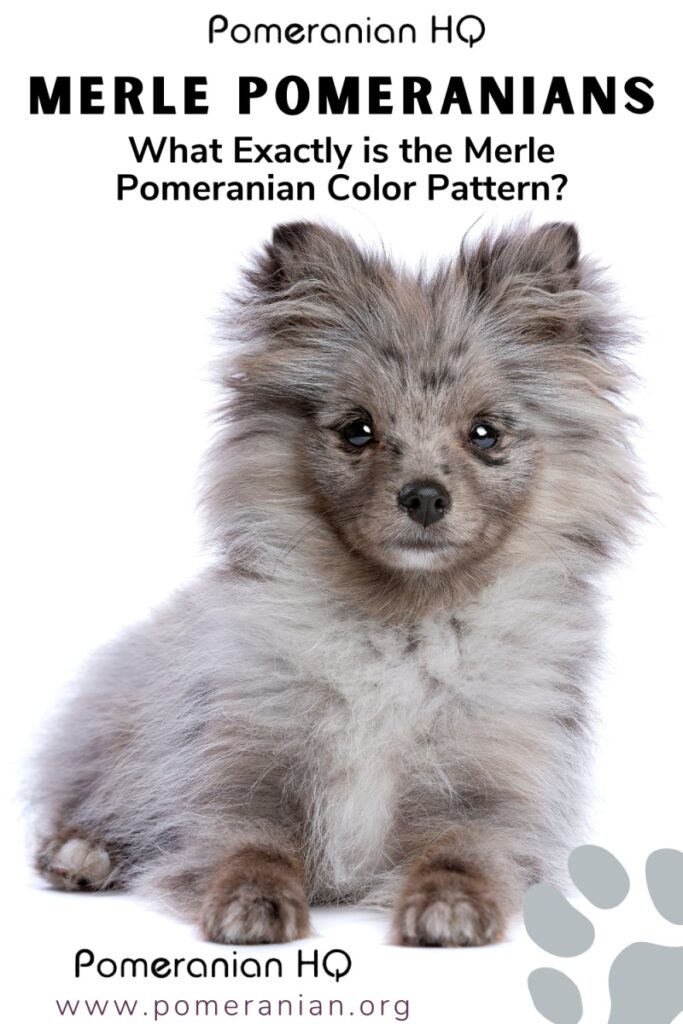
Merle is a color pattern that affects the dog’s coat, skin, and eye coloring. A merle Pomeranian will usually have areas of the coat displaying a mottled or speckled appearance.
The merle gene produces blotchy areas of color in a dog’s coat, can affect skin coloring on the nose and paw pads, and produce blue or odd-colored eyes.
Merle is a color combination pattern in dogs’ coats. It is a solid base color (usually red/brown or black) with lighter blue/gray or reddish patches, which gives a mottled or uneven speckled effect.
The merle gene coat color pattern can appear on any base-colored Pomeranian. The merle pattern is usually clearer on a darker-colored Pomeranian.
Merle is a dominant gene. Dogs displaying the merle pattern must have one merle parent.
Regardless of whether the merle appears on a Pomeranian’s entire coat or just a small part, the merle part will be mottled or speckled in appearance. In some dogs, the merle markings may not always be visible.
The merle gene also affects eye and skin colors. For example, the eyes can be medium to light brown and have indigo specks; a dark, shining sapphire; or a stunning pale blue.
Paw pads and noses frequently have a unique black and pink speckled pattern.
Although most breeds that can have merle coats also typically have white markings (such as around the neck, under the belly, and so on), and often tan points (typically between the white and the darker parts of the coat), these are separate colors from the merle; some dogs do appear completely merle with no white or tan markings.
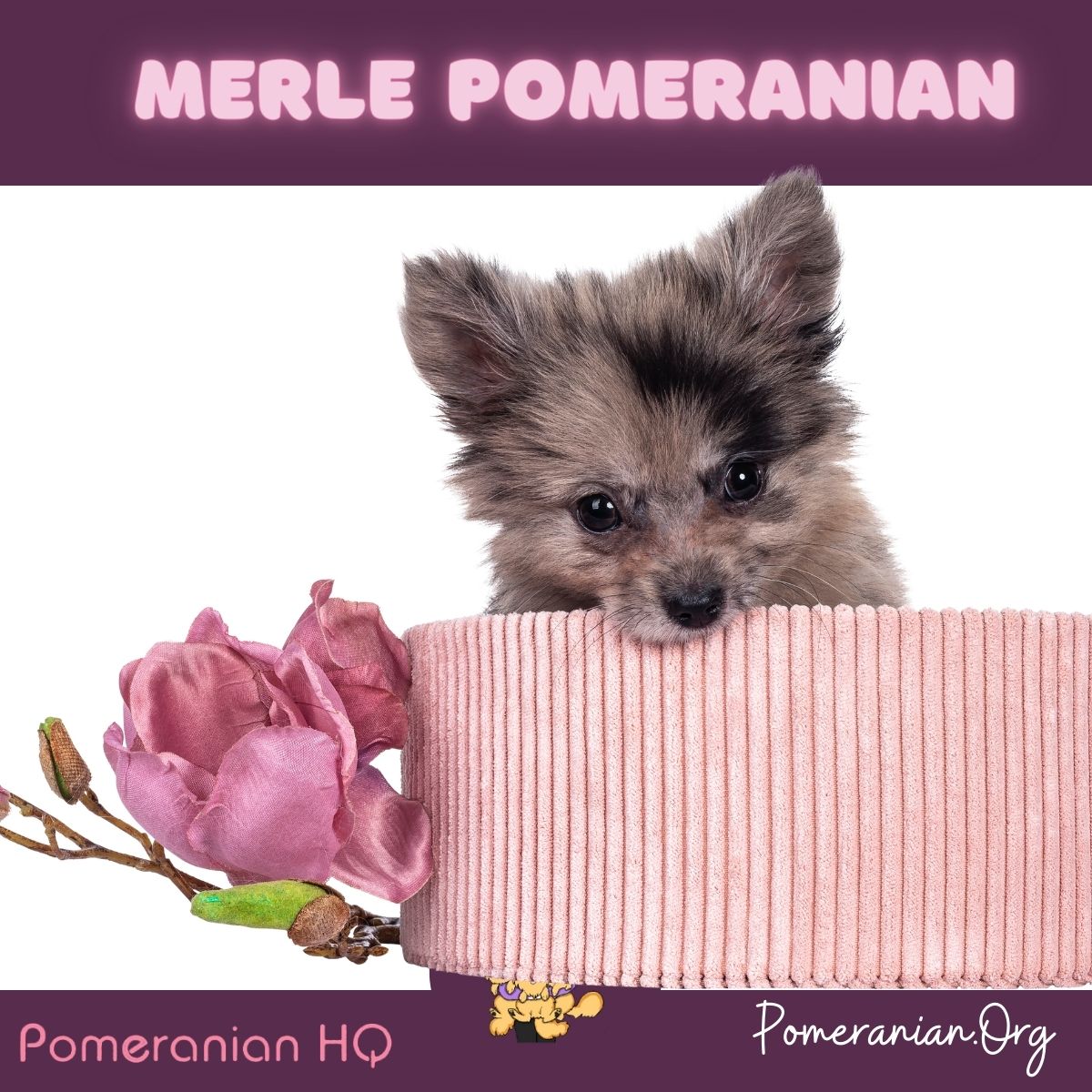
Merle Pomeranian Dog Facts
- The merle Pomeranian is a recent color pattern addition to the Pomeranian breed.
- Merle Pomeranians are not an accepted Pomeranian color pattern in many countries.
- Two merle Pomeranians should never be bred together.
- The merle gene modifies the base color of the dog’s coat. This gene also modifies eye color and the color of the dog’s points ( i.e. nose, eye rims and pads).
- The merle pattern is the result of a dominant gene.
- Merle Pomeranians must have one merle parent.
Everything About the Blue Merle Pomeranian Dog
Blue merle Pomeranian breeders have made great improvements to the merle Pomeranian. The quality has improved very quickly and merle-colored Pomeranians of exquisite type are now a regular sight in the show ring.
The Pom breed now has champion merle Pomeranians. A wonderful achievement by clever, knowledgeable, and dedicated blue merle Pomeranian breeders.
While most merle Pomeranian puppies are incredibly beautiful, there is important merle genetic information that is invaluable to merle Pomeranian breeders and people looking for blue merle Pomeranians for sale.
Merle Pomeranian Price Information
The merle Pomeranian is a rare and expensive type of dog. The price of a merle Pomeranian varies from breeder to breeder. The pup’s location also plays an important part in the cost; they are relatively rare and not accepted by the ANKC here in Australia, so prices can sometimes be higher than expected.
Prices usually start at $6000 upwards. In some other countries where the merle Pom dog is accepted e.g. the USA prices for a merle Pomeranian puppy usually start at $2000.
How Much is a Blue Merle Pomeranian?
Blue merle Pomeranian puppies are one of the most expensive dog breeds. Blue merle Pomeranian’s price can often be up to $6000 for a healthy puppy. The price is so high because they’re very rare and have unique features such as blue eyes.
History of the Merle Pomeranian Dog
Newcomers to the world of Pomeranians should also be aware that the Pomeranian merle is also a very recent addition to the Pomeranian world.
To be fair the same could be said about most of the other Pomeranian colors, but we must mention that the studbook, way back when Queen Victoria imported Marco and other Pomeranians from the continent, was not a closed studbook.
The Pomeranian as a dog breed was really only in the early stages of development. In the very early 1800’s we did not have the rainbow of Pomeranian colors available now.
From the Sportsman’s Cabinet” published 1803:
“this breed is termed the Pomeranian or Wolf-dog”
William Taplin “The Sportsman’s Cabinet”.
The Pomeranian color is referred to as being as:
“mostly of a pale yellow or cream colour, and lightest in the lower parts; some are white, a few black, and others, but very rarely, spotted.”
William Taplin “The Sportsman’s Cabinet”.
Many long-term Pomeranian breeders have expressed concerns about the merle Pomeranians’ sudden appearance on the Pomeranian dog scene. A simple fact is that merle is caused by a dominant gene. So a merle dog must have at least one merle parent.
Merle Pomeranian Colors
Merle may also alter other colors and patterns other than the usual orange merle Pomeranian, chocolate merle, beaver merle Pomeranian, or red merle Pomeranian. These color patterns include tri merle Pomeranian and chocolate merle parti Pomeranian dogs.
Other possible combinations such as brindle merle or liver merle are not typically accepted in many Pomeranian breed standards.
Popular merle pattern combinations include the chocolate merle Pomeranian ( also called a brown merle Pomeranian), red merle Pomeranian, and the very rare and beautiful lavender merle Pomeranian.
Merle Pomeranian Color Variations
The Merle pigment has the ability to dilute both chocolate and black whenever they appear and examples include: chocolate & tan, beaver (diluted chocolate), black & tan, black, dilute black (blue), tan & blue, brindles, and sables.
In particolored dogs, merle can appear in the colored parts. Colors that only give a minimal visual effect include cream, orange, and red.
Blue Merle Pomeranians
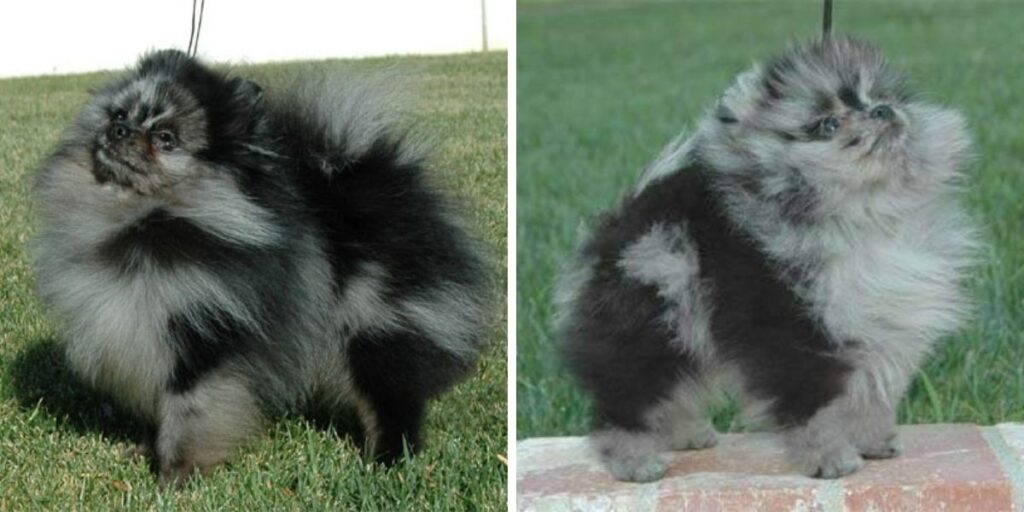
If a black Pom has a visible merle pattern, it’s known as a blue merle. If genes don’t have other effects as well, the dog will be black with grey/blue patches.
Merle with Other Patterns
Apart from being visible on base colors, you can often see merle mixed with various other patterns. E.g., a dog with blue merle & tan colors will have a merle pattern, tan markings, and white markings. Collies and Shetland Sheepdogs routinely have this coloring combination.
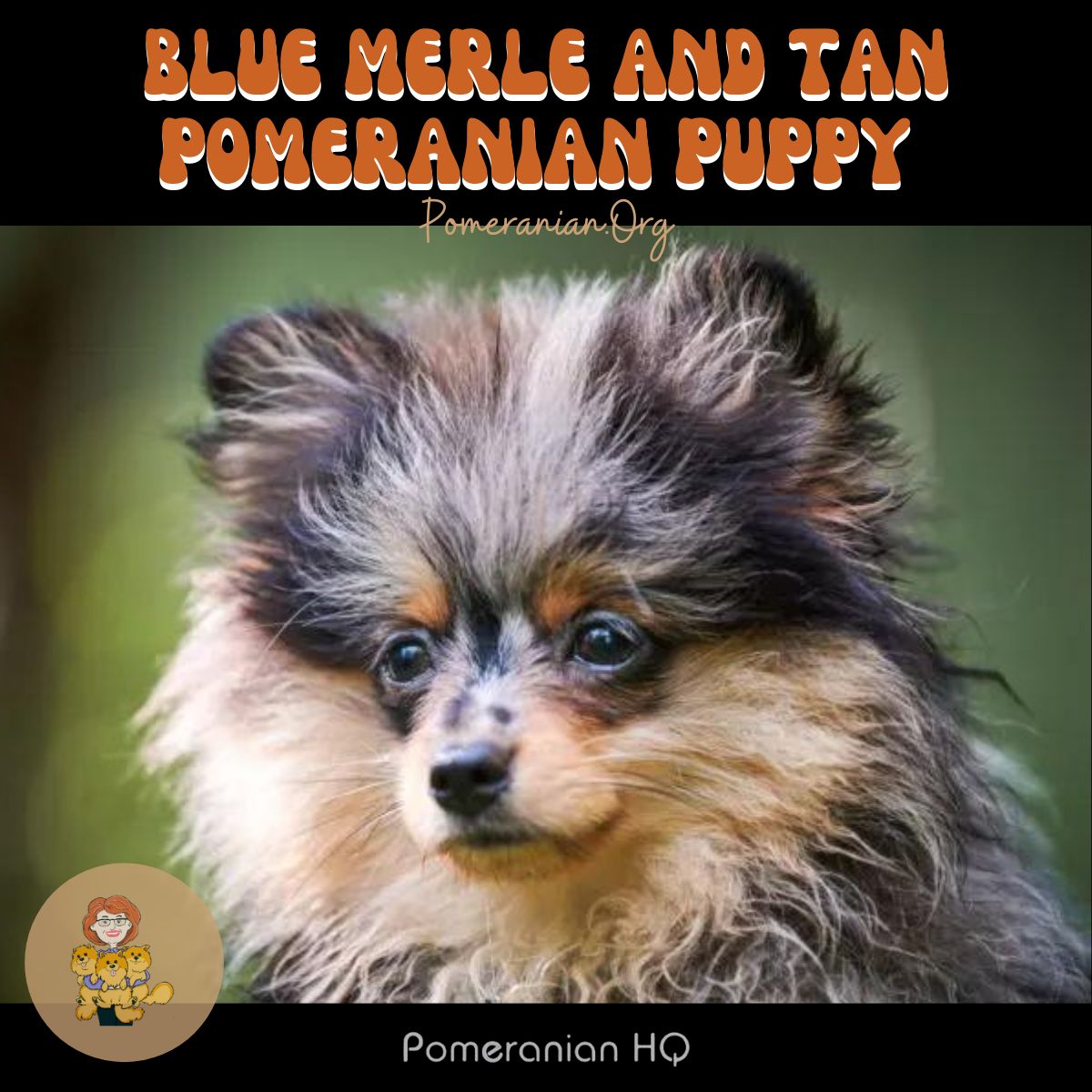
Another pattern variation is a merle Pomeranian with tan. This is a merle Pomeranian with tan markings without white.
Breeding Merle Pomeranians
The merle pattern is the result of a dominant gene and one merle parent is required in breedings which will produce merle puppies. The chances of producing a merle in breedings between a merle dog and a non-merle are about 50%.
Two merle Pomeranians should never be bred together.
The use of lighter-colored Pomeranians in a merle breeding program is not a desirable practice. Attempting to breed a cream merle Pomeranian is not recommended nor is the use of sables.
Breeding a merle-colored Pomeranian to a sable will produce a sable merle Pomeranian. This Pomeranian is called a phantom merle pomeranian because the merle pattern is not visible.
The sable merle Pomeranian could easily be mistaken for a normal sable and bred to another merle. Attempting to breed a black merle Pomeranian is also not recommended. These types of matings can produce phantom merle Pomeranian dogs and defective whites.
In addition to altering base coat color, merle also modifies eye color and coloring on the nose and paw pads.
The merle gene modifies the dark pigment in the eyes, occasionally changing dark eyes to blue, or part of the eye to be colored blue. Since merle causes random modifications, however, both dark-eyed, blue-eyed, and odd-colored eyes are possible. Color on paw pads and nose may be mottled pink and black.

To breed for merle, it’s wise to breed to darker colors because the merle gene affects those dark colors to produce the pattern.
This means the recommended Pomeranian pairing colors are:
Black, chocolate, and blue and each of their tans. You can also breed merle solids with parti Pomeranians in any of the chosen colors.
Don’ts – It’s unwise to breed merle with white, cream, or extreme white piebald pattern parti-color Pomeranians.
Genetics of the Merle Pomeranian
MM: Double merle Pomeranian dogs from breeding merle to a merle. ( MM merle Pomeranians have a high risk of health problems, including eye and hearing issues i.e. being blind and deaf.)
Mm: Merle pom dog with one non-merle parent. ( For those wishing to breed merle Pomeranians this is the preferred mating).
mm: None merle dog.
Breeding Merle to Merle Pomeranians
Merle Pomeranian to Merle Pomeranian should yield 50% of the progeny merle, 25% black, and 25% white. The whites produced from these matings will be both deaf and blind.” Merle is actually a heterozygote of an incomplete dominance gene.
If two such dogs are mated, on average one-quarter of the puppies will be double merles (“double dilute”) and a high percentage of these double-merle Pomeranian puppies could have eye defects and/or be deaf.
Knowledgeable merle Pomeranian breeders who want to produce merle Pom puppies mate a Pomeranian merle with a non-merle Pom dog; these breedings will produce merle Pomeranian puppies.
Health Problems Associated With the Merle Gene
A Pomeranian blue merle Breeder and owners of merle puppies need to be aware of the following health issues associated with this color pattern.
Merle Puppy Pomeranian Health Issues:
Deafness:
The association of merle coloration and deafness is well established.
Eye Defects:
Veterinary studies have been conducted on merle dogs since 1971. Studies on the eyes of these dogs have revealed the following results. All the normal mm dogs were devoid of eye anomalies while all the MM animals had a series of eye problems.
These included the absence of the tapetum lucidum, lack of retinal pigment, a rudimentary lens, microphthalmia, microcornea, microcoria, and other minor conditions. Mm cases also had similar eye problems although less severe in most instances.
Sterility:
Veterinary research done over a 30-year period on merle dogs revealed impairment of sperm production in both merle dogs (Mm) and dogs from merle to merle matings (MM).
Final Thoughts on Merle Pomeranian Puppies
When you see a merle Pomeranian puppy, it’s love at first sight. If you love Pomeranians and are looking for a unique addition to your family, then a merle puppy Pomeranian is perfect.
Do be aware though, the merle Pomeranian is a relatively new breed color. Some say that merles were originally bred by crossing with other dog breeds. Whatever their origins, one thing’s for certain- these dogs love attention from people. Pomeranian dogs are one of the most popular breeds. This is because they have a delightful personality that makes them perfect for any family to adopt and love.
Please note the merle color pattern in Pomeranians is not an approved Pomeranian color in most countries ( apart from the United States of America). The merle is now an accepted color pattern as one of the AKC Pomeranian color patterns.
Today, these tiny dogs can range from $1500- to $5,000+ depending on what features you prefer, such as merle coloring or size. So do some research before purchasing or adopting.
Poms are playful, curious, and adore the company of humans. You will fall in love with the most adorable little pups on earth. They enjoy spending time cuddling up and getting all their needs met, which makes them perfect for any family.
Copyright Pomeranian.org. All Rights Reserved.
Photos on this page are courtesy of Blue Merle Pomeranian breeders, Cyndi Wallen, Pinecrest and Alane Levinsohn.
References and Further Reading:Official Standard of the Pomeranian (AKC). American Kennel Club, 2011.
Official English Kennel Club Pomeranian Breed Standard , 2017.
Denise Leo, The Pomeranian Handbook.
Harmer, Hilary “Dogs and How to Breed Them” John Gifford Ltd 1975.
Lambert, Gloria “Merles” unpublished paper 2004.
Onstott, Kyle revised by Philip Onstott “The New Art of Breeding Better Dogs” Howell Book House Inc. 1978.
Stockman, Mike in Trevor Turner Ed. “Veterinary Notes for Dog Owners” Popular Dogs 1990.
Strain G. in Gloria Lambert “Merles” unpublished paper 2004.
Whitney, Leon F. “How To Breed Dogs” Howell Book House Inc. 1971.
Willis, Malcolm B. “Genetics of the Dog” HF & G Witherby Ltd 1989.
Taplin, William. “The Sportsman’s Cabinet”. 1803.
Purchase The Pomeranian Handbook by Denise Leo
Blue Merle Pomeranian Pictures